How Utilities Use IoT and Meter Data to Predict Equipment Failures
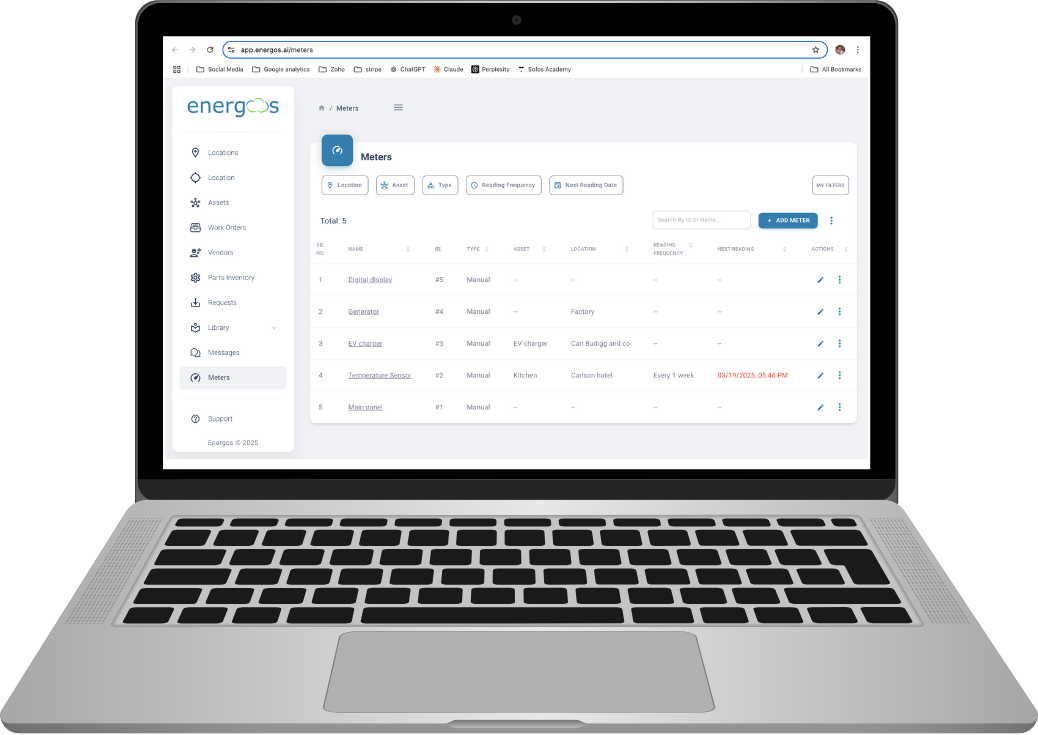
Utilities predict equipment failures by watching the data their assets already produce, such as meter readings, sensor values and SCADA signals, and acting when a value drifts out of its normal range. A rising transformer temperature, a pump drawing more current than usual or a meter that stops reporting can all signal a failure days or weeks before it happens. When those signals automatically create work orders, crews fix problems on their schedule instead of during an outage.
This guide explains why utilities are moving from fixed maintenance schedules to data-driven maintenance, what data to use, which warning signs to watch for, and how to turn alerts into completed repairs.
Why are utilities moving to predictive maintenance?
Most utilities still maintain equipment on fixed schedules: inspect every substation every quarter, service every pump every year. Schedules are simple, but they have two costly blind spots. Some assets get serviced when they don't need it, using crew time that is already stretched. Others fail between visits, because nothing was watching them in the weeks that mattered.
Predictive maintenance closes those gaps by letting the condition of each asset decide when it needs attention. Three pressures are pushing utilities in this direction:
- Aging infrastructure: many networks run equipment well past its original design life, where failures become more frequent and harder to predict by age alone.
- Distributed assets: substations, pump stations, meters and renewable sites are spread over wide areas, so every unnecessary site visit costs hours of travel.
- Reliability expectations: customers, regulators and the businesses that depend on the grid expect fewer and shorter outages.
The good news is that most utilities already collect the data predictive maintenance needs. The missing piece is usually connecting that data to the maintenance work.
What data can utilities use to predict failures?
Three sources cover most of what a utility needs:
- Meters: smart meters, sub-meters and equipment meters record consumption, voltage, runtime hours, flow and pressure. Beyond billing, these readings show how hard equipment is working and when it behaves unusually.
- IoT sensors: low-cost sensors add temperature, vibration, humidity, oil level and door status where no meter exists, for example inside a transformer kiosk or on a pump bearing.
- SCADA and control systems: the operational data utilities already use to run the network, including alarms, breaker operations and load.
In a CMMS, each of these becomes a "meter" attached to an asset: a reading with a history and a normal range. Our post on using meters in your CMMS covers the basics. The value comes from combining them. A temperature reading means more when you can see the load on the same asset at the same time, and its full maintenance history next to it.
Which warning signs should utilities watch for?
The signals differ by asset, but the pattern is the same: a reading that trends away from normal, or changes faster than it should.
Transformers
- Oil or winding temperature rising at the same load.
- Frequent operation near or above rated load.
- Oil level dropping or moisture rising.
Pumps and motors
- Current draw increasing for the same flow.
- Rising vibration or bearing temperature.
- Runtime hours climbing as the pump works harder to hold pressure.
Substations and switchgear
- Repeated breaker operations or alarms on the same feeder.
- Hot spots found by thermal sensors or inspections.
- Cabinet humidity or temperature outside its normal band.
Meters and communications
- Meters that stop reporting or send gaps in data.
- Sudden jumps or drops in consumption that don't match the customer's pattern.
Solar and distributed energy sites
- Generation falling below what the weather and season predict.
- Inverters tripping or going offline.
Axis Bank applied this approach to solar, using IoT and AI to monitor 250 rooftop installations in real time. Read the Axis Bank solar monitoring case study.
How does an alert become a repair?
Data only prevents failures if someone acts on it. In a connected setup, the workflow runs like this:
- Readings flow in automatically from meters, sensors and SCADA, and are attached to the right asset.
- Rules watch every reading. For example: transformer temperature above its limit, pump runtime past its service interval, or a meter silent for 24 hours.
- When a rule triggers, a work order is created automatically, with the asset, the reading that triggered it and its recent trend.
- The work order goes to the right crew, with priority based on how critical the asset is.
- The technician follows a checklist, logs findings and closes the job, and the asset's history updates.
Energos supports this kind of rule-based automation through Meters & Automation: readings, thresholds or operating conditions can create work orders, notify managers or escalate issues to the right team automatically. Rules can also schedule preventive maintenance based on runtime or usage rather than the calendar, and every job is recorded against the asset in asset management.
How should a utility get started?
You don't need a network-wide sensor program to begin. A phased approach shows results quickly:
- Pick one asset class with costly failures, such as distribution transformers or a set of pump stations.
- Connect the data you already have. Most utilities can start with existing meter and SCADA readings before adding new sensors.
- Set simple rules first: fixed limits on temperature, runtime or missing data. Refine them as you learn what normal looks like.
- Route every alert to a work order, so nothing depends on someone watching a dashboard.
- Review results monthly: failures avoided, false alarms, and response times. Then extend to the next asset class.
Starting small keeps the alert volume manageable and builds the history that makes later predictions more accurate. Learn more about maintenance for energy and utilities, or start with our guide What Is a CMMS?.
Frequently asked questions
What is predictive maintenance for utilities?
It is maintenance triggered by the condition of an asset rather than a fixed schedule. Utilities watch meter, sensor and SCADA data and act when readings show early signs of failure.
Do utilities need new sensors to start?
Not always. Many start with meter and SCADA data they already collect, then add sensors where data is missing, such as transformer temperature or pump vibration.
What is the difference between condition-based and predictive maintenance?
Condition-based maintenance acts when a reading crosses a set limit. Predictive maintenance looks at trends to estimate when a failure is likely. Most utilities start with condition-based rules and move toward prediction as their data history grows.
How does a CMMS help with predictive maintenance?
A CMMS connects readings to assets and turns alerts into work orders, assigned to the right crew with the asset's history. Without that link, alerts sit in dashboards and failures still happen.
Topics:
CMMS
Stop Losing Revenue to the "Out of Order" Sign.
Ready to guarantee 99.9% uptime? Join operations teams who’ve eliminated reactive maintenance and use the Energos Digital Operations Hub to automate their repairs and protect their bottom line. Get started for free today.