How Fuel Retailers Fix Vendor Lock-In & Eliminate Unplanned Downtime
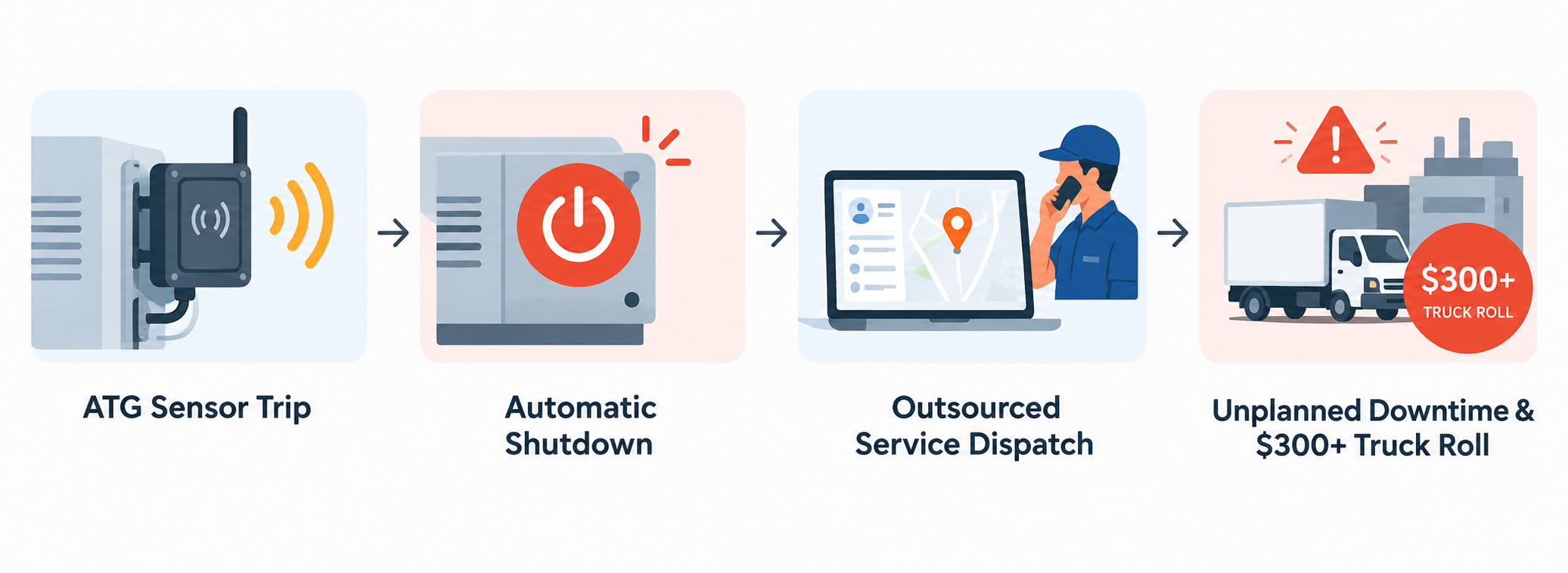
If you run operations or facilities for a 50-to-500 store convenience chain, your daily maintenance workflow likely looks something like this:
- An ATG sump sensor trips due to water ingress or liquid detection.
- An automated shutoff triggers, disabling fuel dispensers instantly to maintain environmental compliance.
- An outsourced monitoring partner dispatches a third-party technician via your facility management software.
- You pay a $250+ emergency truck roll, lose hours of fuel sales, and risk losing a customer to the C-store across the street.
To most operators, this feels like standard procedure—the cost of staying compliant. But when you break down the mechanics of this workflow, a clear issue emerges: it is a reactive, fragmented system designed around vendor lock-in rather than asset uptime.
The Hidden Trap in Today’s C-Store Operations
As fuel networks grow through acquisition, their tech stacks quickly become fragmented. A typical operator might manage four different generations of Automatic Tank Gauges (ATGs)—from Veeder-Root to Incon/Franklin Fueling—alongside separate third-party Facility Management (FM) software.
This architecture creates three distinct operational bottlenecks:
1. "Binary" Reactive Shutdowns
Environmental regulations are strict, so sensors are often programmed to shut down equipment the moment a threshold is crossed. However, many sensor trips are early indicators or minor baseline drifts. When systems rely on binary alarms, there is no middle ground between "everything is fine" and "shut the pump down."
2. OEM Vendor Lock-In
When hardware OEMs manage monitoring as an outsourced service, data is kept in closed ecosystems. Frequent hardware or sensor obsolescence cycles force operators into expensive, unexpected equipment upgrades just to maintain monitoring capabilities.
3. Loss of Asset History Ownership
When third-party maintenance platforms retain your work orders, mean-time-between-failures (MTBF), and repair histories, you do not truly own your operational data. If you decide to switch service providers, your historical data often stays behind.
Moving from Outsourced Dependencies to Data Ownership
The key to reducing emergency maintenance costs isn't replacing your existing hardware—it's unifying the telemetry data your hardware already produces.
When global energy operators evaluated these challenges, the goal wasn't to replace their physical infrastructure or deploy another standalone CMMS. Instead, the focus shifted to gaining direct control over their operational telemetry.
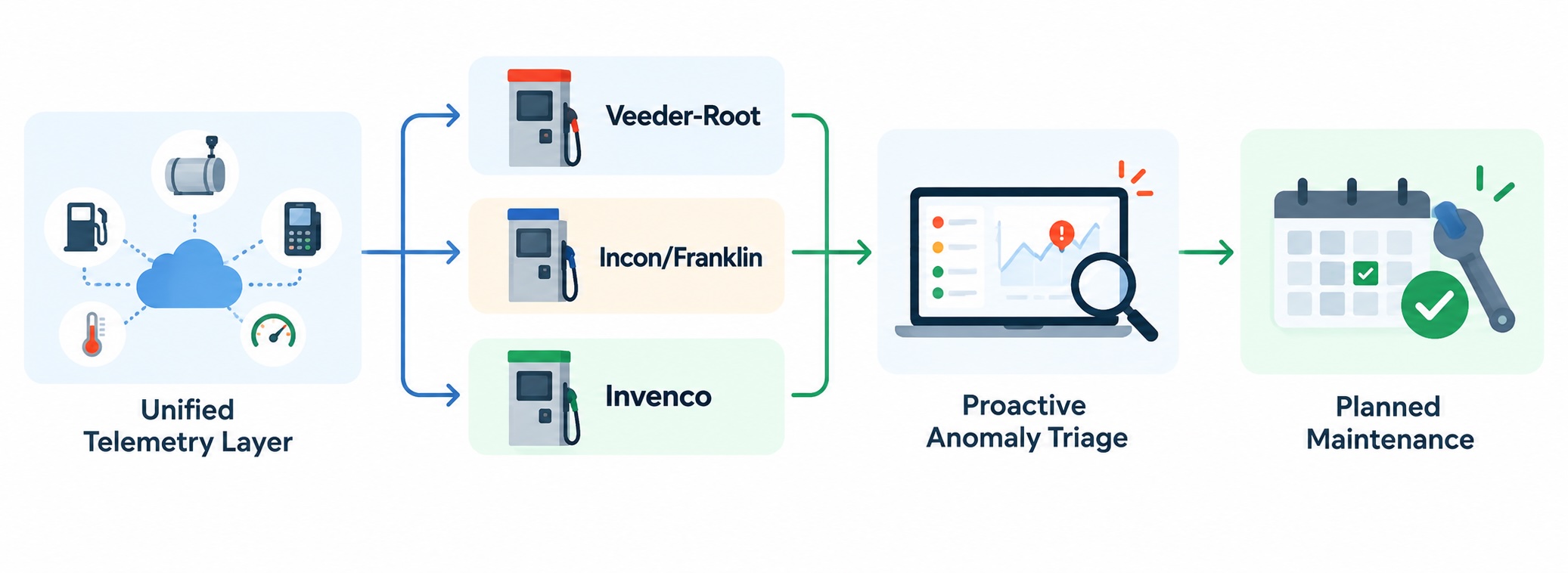
By introducing an open, vendor-agnostic intelligence layer above existing ATGs, refrigeration sensors, and HVAC units, operators can:
- Catch Baseline Drifts Early: Identify subtle liquid level changes in containment sumps or temperature fluctuations in refrigeration units before an automated shutdown or inventory loss occurs.
- Filter False Alarms: Validate whether a sensor alert requires an immediate emergency truck roll or can be combined with a scheduled maintenance visit.
- Maintain True Asset Ownership: Centralize repair histories and telemetry metrics in a single system owned by the retailer, eliminating dependency on single-source vendors.
The Strategic Shift: Planned vs. Reactive Maintenance
Unplanned downtime directly impacts gross margins. Convenience store food sales continue to grow as a primary profit driver, making forecourt fuel availability essential for driving foot traffic into the store. A shut-down fuel lane or a broken cooler does more than create a maintenance ticket—it actively diverts customers to competitors.
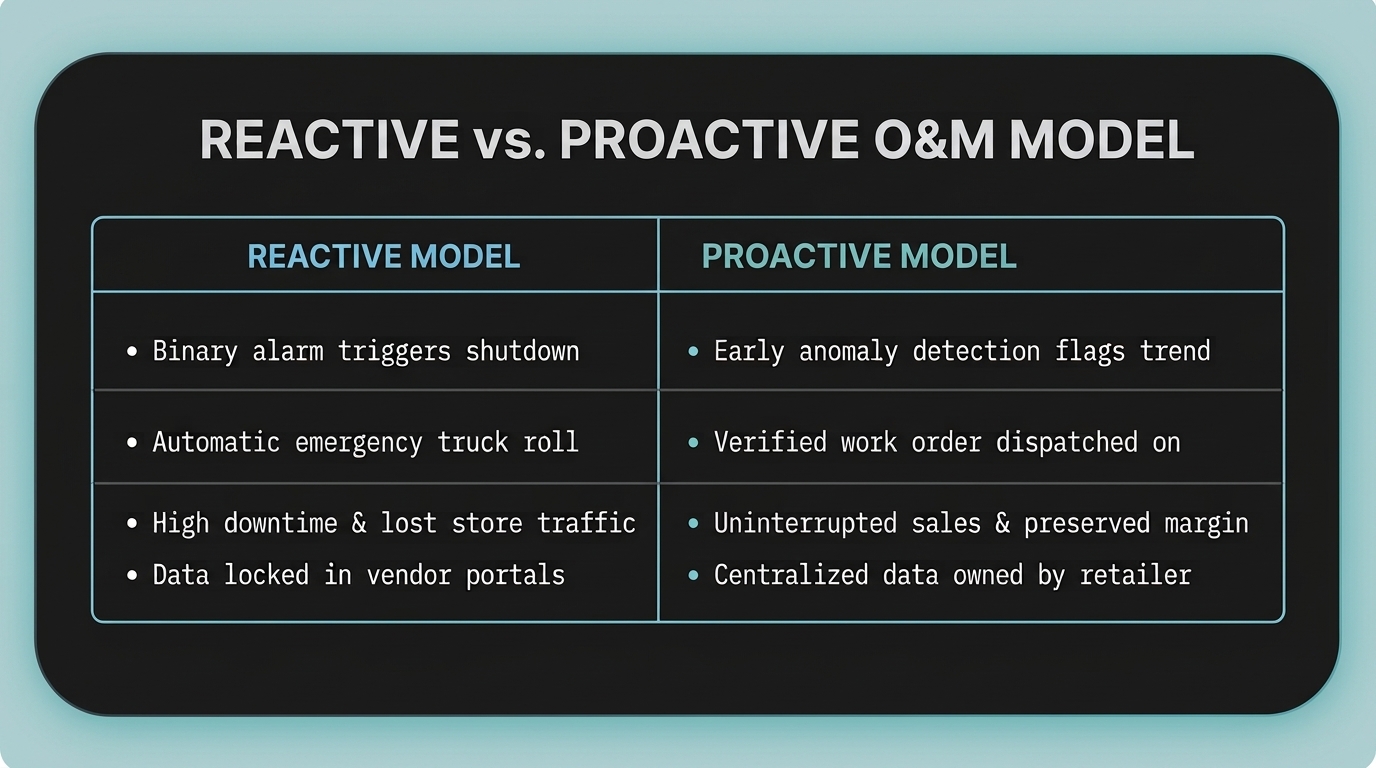
By shifting from reactive dispatches to unified, proactive monitoring, fuel retailers can protect their margins, eliminate unnecessary truck rolls, and take back control of their operational data.
Ready to Take Control of Your Forecourt Telemetry?
Learn how energos.ai connects directly to your existing ATG and store equipment to deliver proactive maintenance intelligence—without forcing hardware overhauls.
Topics:
Operations & Maintenance
Fuel Retail & Convenience Store
Stop Losing Revenue to the "Out of Order" Sign.
Ready to guarantee 99.9% uptime? Join operations teams who’ve eliminated reactive maintenance and use the Energos Digital Operations Hub to automate their repairs and protect their bottom line. Get started for free today.