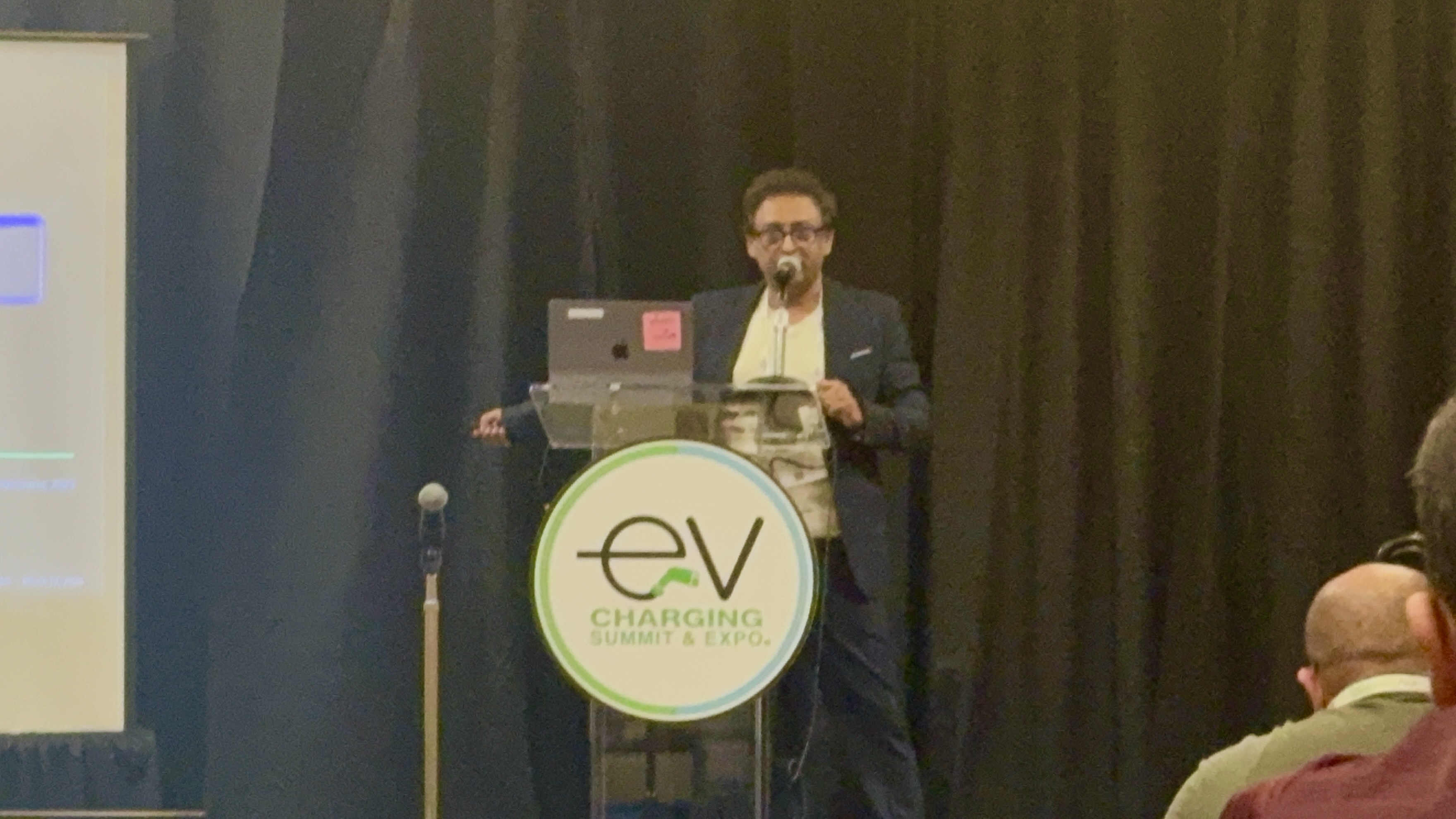
As electrification continues accelerating across commercial transportation, fleets are facing increasing operational complexity. Managing charging infrastructure, vehicle readiness, energy consumption, uptime, and maintenance workflows at scale requires a fundamentally different operational approach than traditional fleet management.
During the session, Rajesh shared insights drawn from hands-on experience managing EV fleet operations and supporting charging infrastructure at scale. His discussion focused on the growing need for operational visibility and how real-time data can help fleets improve reliability, reduce downtime, and scale with greater confidence.
Moving Beyond Worst-Case Assumptions
A central theme of the discussion was the industry’s tendency to rely on conservative operational assumptions in the absence of real-time intelligence.
Many fleets still operate with limited visibility into:
- Charging behavior across sites
- Vehicle state of charge trends
- Charger reliability and utilization
- Infrastructure performance issues
- Predictive indicators of maintenance failures
As a result, operators often compensate by overbuilding buffers into schedules, overcharging vehicles, or relying heavily on reactive maintenance strategies. Rajesh emphasized that while these approaches may reduce short-term uncertainty, they ultimately create inefficiencies that become harder to sustain as fleets scale. Instead, he discussed how deeper operational visibility enables teams to make decisions based on real-world fleet conditions rather than assumptions.
Why Operational Visibility Matters
Throughout the session, Rajesh highlighted how real-time and historical operational data can fundamentally transform fleet management. By gaining deeper insight into charger health, charging sessions, infrastructure performance, and vehicle readiness, operators can:
- Improve fleet utilization
- Reduce unexpected downtime
- Optimize charging schedules
- Identify operational bottlenecks earlier.
- Improve maintenance response times.
- Increase confidence in daily operations.
The conversation also explored the growing role of predictive maintenance and AI-driven monitoring in the EV ecosystem.
As fleets move from pilot deployments to large-scale electrification programs, reactive operations become increasingly difficult to manage. Predictive systems that identify issues before failures occur are quickly becoming essential for maintaining reliability and uptime.
Industry Conversations at EV Expo 2026
EV Expo 2026 brought together leaders from across the electrification ecosystem, including fleet operators, charging providers, utilities, OEMs, and technology companies. Across panels and conversations throughout the event, there was strong alignment around a shared industry challenge: scaling EV infrastructure successfully requires not only deployment, but operational excellence.
Rajesh’s session contributed to this broader conversation by focusing on the operational realities fleets face every day and the importance of building systems that support smarter, more proactive decision-making. The event also highlighted how rapidly the industry is evolving. Conversations that once centered primarily on charger deployment and adoption are increasingly shifting toward uptime, reliability, predictive operations, and long-term scalability.
Looking Ahead
As EV fleets continue expanding nationwide, the ability to operate intelligently and proactively will become a major competitive advantage.
The session at EV Expo 2026 reinforced an important takeaway for the industry: successful electrification depends not only on infrastructure growth, but on the systems, visibility, and operational intelligence needed to keep that infrastructure running reliably at scale. We appreciate everyone who attended the session and connected with the team during the event, and we look forward to continuing the conversation around the future of intelligent EV fleet operations.